
Exploring Invented Languages
Virgilius Maro- The Grammatical Prankster of the Seventh Century

In my continuing exploration of the art and “secret vice” of language invention I am going back to the 7th century and one example of the playful and subversive work of medieval scholars who treated language itself as a canvas for creative experimentation. Schnapp (1991) characterises the Middle Ages as “a golden age of neologisms and verbal invention” (278).
The Grammatical Prankster of the Seventh Century
Enter Virgilius Maro Grammaticus, a seventh-century Irish scholar whose name itself is likely an elaborate joke.
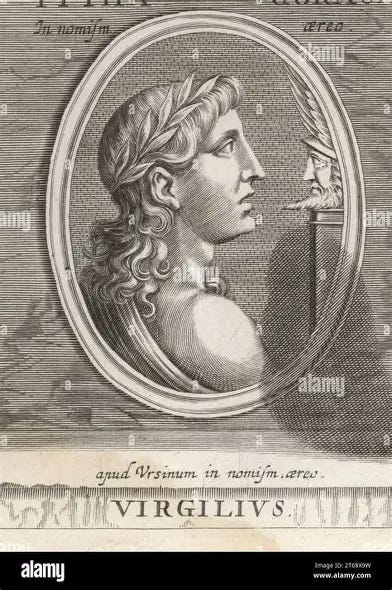
Writing under the pseudonym of Rome’s greatest poet, this mysterious figure composed two grammatical treatises—Epitomae and Epistolae—that ostensibly drew on the respected fourth-century grammarian Aelius Donatus. But rather than faithfully transmitting established doctrine, Virgilius constructed an alternative grammatical universe characterised by deliberate obfuscation, creative wordplay, and satirical invention.
The ludic dimension of Virgilius’ project manifests in multiple layers of playful experimentation. He invented pseudo-Latin terms constructed from recognizable morphological elements but absent from any existing lexicon—words like “inscrutari,” “gande,” “declinamentum,” and “querulous”—creating what might be called “plausible Latin” that sounds authentic while being entirely fabricated. This technique remarkably anticipates modern conlanging methodology: constructing invented words from systematic phonological and morphological principles that give them internal coherence and aesthetic plausibility. In some of Tolkien’s earliest language invention he too would invent words that sounded like a primary world language, in this case Finnish, but were completely invented. For example for the Finnish name Suomi Tolkien invented an alternative place name Sutse that sounded Finnish but was completely invented (Kullervo, p. 50).
But Virgilius didn’t stop at inventing words. He populated his grammatical discussions with citations from entirely fictitious authorities, creating an elaborate scholarly apparatus of invented grammarians with exotic names such as Galbungus, Glengus, Asinus, and Aemilius Asper (not the historical grammarian of that name, but Virgilius’ own fabricated character). Long before authors like H Rider Haggard, Robert Louis Stevenson and of course Tolkien were creating ‘new romance” inspired items like maps, reproductions of invented artefacts and language glossaries, Virgilius was inventing phantom scholars who cite non-existent texts, offer contradictory grammatical rules, and engage in absurdist debates, transforming grammatical discourse into imaginative fiction. In one text, the invented grammarian Galbungus argues with another grammarian for fourteen days and nights over the vocative form of the pronoun ego!
According to Lorenzo Di Maggio’s comprehensive 2021 study (Virgilius redivivus), Virgilius’ work functions primarily as sophisticated parody combined with deliberate mystification—a reductio ad absurdum of how grammar had absorbed and replaced literary texts in the early Middle Ages. The analysis centers on the author figure as a self-proclaimed “Virgilius redivivus” (reborn Virgil) who systematically inverts centuries of poetic commentary tradition. Where ancient and medieval grammarians had used poetry primarily as raw material for extracting grammatical rules, Virgilius reverses this relationship: he uses grammatical apparatus as material for creative invention, constructing a linguistic parallel universe populated by a bizarre cast of pseudo-classical authorities presented as elaborate pastiche. It is interesting to compare this to what Tolkien does in some of his own para-textual language related documents. For example, in his “Name List to the Fall of Gondolin”, Tolkien has his primary world mariner Eriol record a philological argument among invented Elvish philologists about the meaning of one of the names of the Gondolithim Egalmoth
Egalmoth is a great name, yet none knew clearly its meaning – some have said its bearer was so named in that he was worth a thousand elves (but Rumil says Nay) and other that it signifies the mighty shoulders of that Gnome, and so saith Rumil, but perchance it was woven of a secret tongue of the Gondolithim, yet he was lord of the house of the Heavenly Arch, and got even out of the burning of Gondolin and dwelt ever after at the mouth of Sirion, but was slain in a dire battle there when Melko seized Elwing.
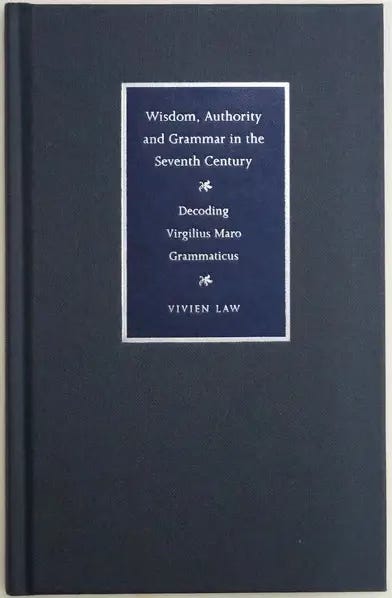
Vivien Law, in Wisdom, authority, and grammar in the seventh century : decoding Virgilius Maro Grammaticus however argues that the works of Virgilius are both too long and too complex to be simply parody, and that the unusual mixture of traditions and genres within his works suggests that he is concerned with more than just grammar. She concludes that Virgilius is a serious metalinguistic thinker.
What connects Virgilius’ seventh-century linguistic pranks to today’s language inventors? Perhaps it’s the recognition that language is not merely a transparent tool for communication but a medium ripe for creative manipulation—a system whose very structures can be dismantled, reimagined, and reconstructed for purposes ranging from the satirical to the sacred.
Virgilius understood this deeply. His elaborate hoax wasn’t merely pedantic mockery—it was a demonstration that grammatical discourse could become a vehicle for imaginative play, anticipating by thirteen centuries what modern conlangers know instinctively: constructing a language forces conscious decisions about grammar, phonology, and meaning that illuminate the peculiarities of human language itself. As Tolkien wrote in his November 1931 lecture “A Secret Vice,” successful language construction requires “chosen principles” and the discipline to “courageously abide by your own rules, resisting the temptation of the supreme despot to alter them.” (SV, p. 91)
What Virgilius’s medieval forgery and Tolkien’s modernist craft share is a recognition that language-making is both creative freedom and self-imposed constraint. The hoax worked precisely because Virgilius committed fully to his invented system, never breaking character to serve convenience - in a sense creating what Tolkien in On Fairy-stories called “inner consistency of reality” (OFS, p. 59). In this sense, the art of the con—whether grammatical or linguistic—lies not in deception but in fidelity: the maker’s willingness to be bound by the world they’ve created. Virgilius proved that even fabricated rules, rigorously followed, can reveal genuine truths about how language shapes thought.
Next time we will explore another example of Irish Medieval Language Invention - Tenga Bithuna - a real tongue twister!
Namárië for now.
Di Maggio, Lorenzo. Virgilius redivivus: Einführung, Kommentar und Übersetzung zu Virgilius Maro Grammaticus. WVT Wissenschaftlicher Verlag Trier 2021
Vivien Law, Wisdom, authority, and grammar in the seventh century : decoding Virgilius Maro Grammaticus. Cambridge: Cambridge University Press, 1995
Schnapp, Jeffrey T., “Virgin Words: Hildegard of Bingen’s Lingua Ignota and the Development of Imaginary Languages Ancient to Modern”, Exemplaria III, 2, 1991, pp. 267–298.
Tolkien, J.R.R. “Si Qente Feanor and Other Elvish Writings’ edited by Patrick Wayne, Christopher Gilson, Carl Hostetter, Bill Welden and Arden R. Smith, Parma Eldalamberon, 15, p. 23, 2004
Tolkien, J.R.R. Tolkien On Fairy-stories. Edited by Verlyn Flieger and Douglas A. Anderson. London: HarperCollins, 2008.
Tolkien, J.R.R. The Story of Kullervo. Edited by Verlyn Flieger. HarperCollins, 2015.
Tolkien, J.R.R. A Secret Vice: Tolkien on Invented Languages. Edited by Dimitra Fimi and Andrew Higgins. London: HarperCollins, 2016.
Just an addendum to the post I discovered Virgilius appears in Umberto Eco’s semiotic Medieval mystery The Name of the Rose! Here is the passage -““The men of my islands are all a bit mad,” William said proudly. “Let us look in the other case.” “Virgil.” “What is he doing here? What Virgil? The Georgics?” “No. Epitomae. I’ve never heard of it.” “But it’s Virgil of Toulouse, the rhetorician, six centuries after the birth of our Lord. He was considered a great sage….” “Here it says that the arts are poema, rethoria, grama, leporia, dialecta, geometria…. But what language was he writing?” “Latin. A Latin of his own invention, however, which he considered far more beautiful. Read this; he says that astronomy studies the signs of the zodiac, which are mon, man, tonte, piron, dameth, perfellea, belgalic, margaleth, lutamiron, taminon, and raphalut.” “Was he crazy?” “I don’t know: he didn’t come from my islands. And listen to this; he says there are twelve ways of designating fire: ignis, coquihabin (quia incocta coquendi habet dictionem), ardo, calax ex calore, fragon ex fragore flammae, rusin de rubore, fumaton, ustrax de urendo, vitius quia pene mortua membra suo vivificat, siluleus, quod de silice siliat, unde et silex non recte dicitur, nisi ex qua scintilla silit. And aeneon, de Aenea deo, qui in eo habitat, sive a quo elementis flatus fertur.” “But there’s no one who speaks like that!” “Happily. But those were times when, to forget an evil world, grammarians took pleasure in abstruse questions. I was told that in that period, for fifteen days and fifteen nights, the rhetoricians Gabundus and Terentius argued on the vocative of ‘ego,’ and in the end they attacked each other, with weapons.” “But this, too. Listen….” I had grasped a book marvelously illuminated with vegetable labyrinths from which monkeys and serpents peered out. “Listen to these words: cantamen, collamen, gongelamen, stemiamen, plasmamem, sonerus, alboreus, gaudifluus, glaucicomus….” “My islands,” William said again, with tenderness. “Don’t be too harsh with those monks of far-off Hibernia. Perhaps, if this abbey exists and if we still speak of the Holy Roman Empire, we owe it to them. At that time, the rest of Europe was reduced to a heap of ruins; one day they declared invalid all baptisms imparted by certain priests in Gaul because they baptized “in nomine patris et filiae’—and not because they practiced a new heresy and considered Jesus a woman, but because they no longer knew any Latin.” (Name of the Rose, pp. 302-303)
So, so fascinating! Thanks so much, Andrew, for a brilliant introduction to a very quaint and interesting author. I’ll be sure to look into Rey’s scholarship in particular.
Your mention of 'inscrutari' really peaked my interest. You rightly sense that this word isn’t very prestigious, a bit niche, a bit late. But I'm not sure it should completely cede its authenticity: Judging from the TLL, 'inscrutor' appears in Augustine, and he is clearly fond of the derivative adjective 'inscrutabilis', which appears to have been far more popular.
Permit me, Andrew, a perfect digression: As I read the sources, I couldn't help but notice Jerome's translation of Jeremiah 17:9, "Pravum est cor omnium, et inscrutabile : quis cognoscet illud ? ". The Hebrew word that Jerome translates is אנוש. It has a Holam in the Massoretic text, which means "human". That is probably why the Septuagint simply translates it as ἂνθρωπος. Jerome comments, however, that he is reading אנוש with a Shuruk (Comm. in Ierm. 17 V. 9-10), which according to him ought to be translated 'Inscrutabile, sive desperabile'. I haven't an inkling why! I'll look into it soon, probably, as I'm working on a post on Christian Hebraists commening on the Bible.
So: I surmise that it is a late word certainly, and probably not of highborn Latinity; but still a part of the lexicon before Virgil Grammaticus. But you tell me!